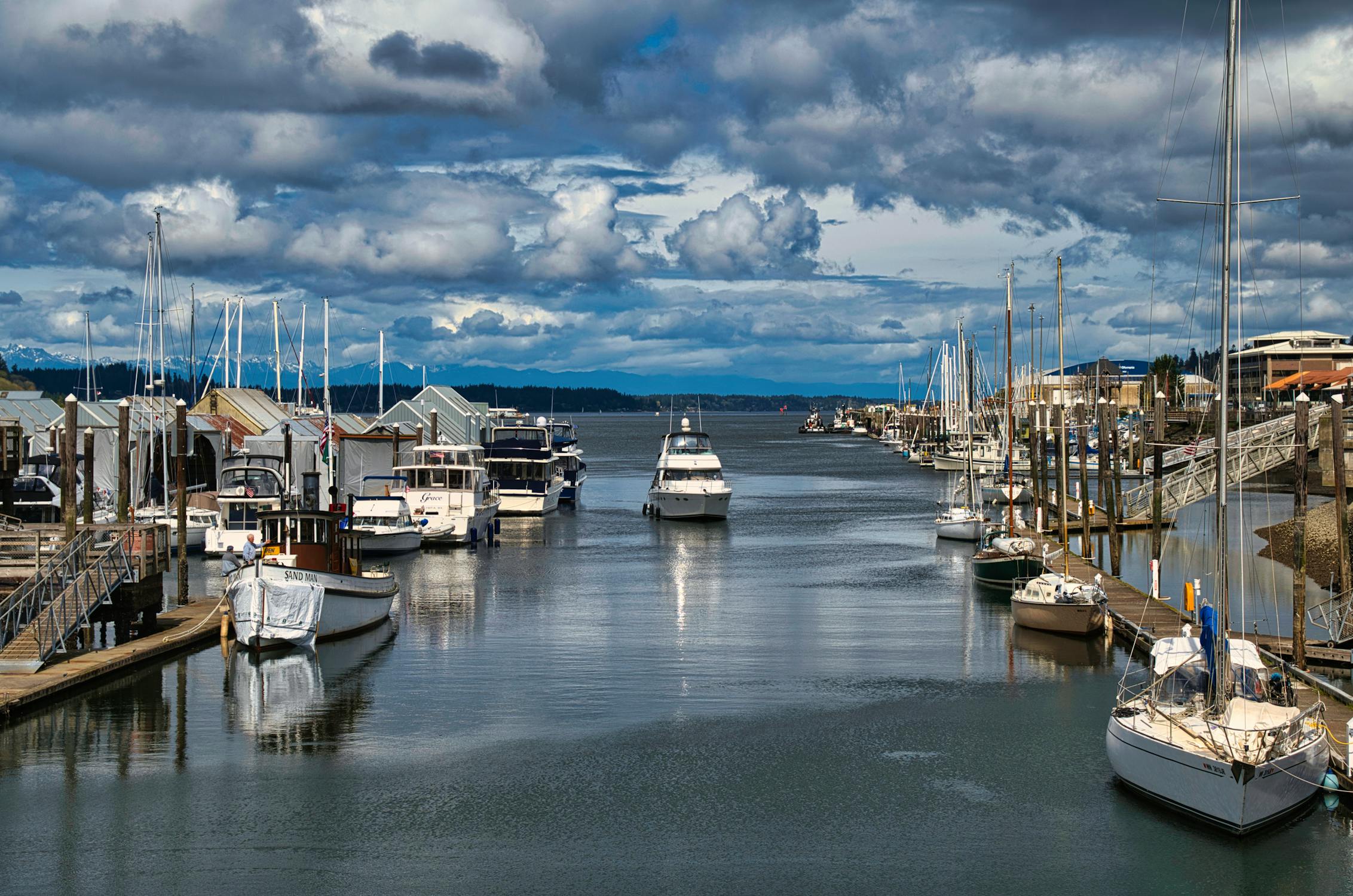


Standard homeowners insurance does not cover flood damage — a fact that catches many Kitsap County homeowners off guard after a major storm. With over 254 miles of marine shoreline and numerous low-lying coastal areas, Kitsap County faces meaningful flood risk from storm surges, heavy rainfall, and rising sea levels. According to First Street Foundation, thousands of properties in Kitsap County face some level of flood risk over the next 30 years. This guide explains who needs flood insurance in Kitsap County, what it costs under FEMA’s updated pricing system, and how to determine your property’s actual risk.
Why Standard Homeowners Insurance Won’t Protect You From Flooding
Every standard homeowners insurance policy sold in Washington State — regardless of carrier — explicitly excludes flood damage. This applies to Allstate, State Farm, PEMCO, Mutual of Enumclaw, and every other provider. If floodwater enters your home from any external source (rising rivers, storm surge, heavy rainfall pooling, coastal inundation), your homeowners policy will not pay a single dollar toward repairs.
This exclusion exists because flood risk is concentrated in specific geographic areas, making it unprofitable for private insurers to cover. Instead, the federal government operates the National Flood Insurance Program (NFIP) through FEMA, which provides flood coverage to homeowners, renters, and businesses in participating communities. Kitsap County and all incorporated cities within it (Bremerton, Bainbridge Island, Poulsbo, Port Orchard, Silverdale) participate in the NFIP, meaning residents can purchase federal flood insurance.
FEMA Flood Zones in Kitsap County: Understanding Your Risk
FEMA assigns every property in the United States a flood zone designation based on its risk of flooding. These designations directly affect whether you’re required to carry flood insurance and how much you’ll pay. Here are the zones most relevant to Kitsap County homeowners:
| Zone | Risk Level | Insurance Required? | Common Kitsap Locations |
|---|---|---|---|
| Zone AE | High risk (1% annual chance) | Yes, if mortgage | Gorst Creek area, Bremerton waterfront, low-lying Port Orchard shores |
| Zone VE | High risk + coastal wave action | Yes, if mortgage | Bainbridge Island shoreline, Manchester, Point No Point |
| Zone X (shaded) | Moderate risk (0.2% annual chance) | Recommended, not required | Areas adjacent to Zone AE in Silverdale, Poulsbo lowlands |
| Zone X (unshaded) | Minimal risk | Optional | Higher-elevation areas in Silverdale, Kingston, Central Kitsap |
You can look up your property’s exact flood zone designation using the FEMA Flood Map Service Center by entering your address. The Kitsap County Department of Emergency Management also provides local flood risk resources and preparedness guides.
How Much Does Flood Insurance Cost in Kitsap County?
Flood insurance costs in Kitsap County are now determined by FEMA’s Risk Rating 2.0 pricing methodology, which replaced the older system in October 2021 for new policies and April 2023 for renewals. Instead of basing premiums primarily on flood zone maps, Risk Rating 2.0 evaluates each property individually based on multiple factors.
Here’s what current flood insurance costs look like nationally and how they apply to Kitsap County:
| Risk Category | Typical Annual Premium (NFIP) | Kitsap County Context |
|---|---|---|
| Low-to-moderate risk (Zone X) | $200–$600/yr | Higher-elevation homes in Silverdale, Kingston, Central Kitsap |
| Moderate risk (Zone X shaded) | $400–$1,100/yr | Properties near creeks, low areas adjacent to flood zones |
| High risk (Zone AE) | $800–$1,600/yr | Gorst, Bremerton waterfront, Port Orchard lowlands |
| Coastal high risk (Zone VE) | $1,600–$3,000+/yr | Bainbridge Island shoreline, exposed coastal properties |
Pricing disclaimer: The cost estimates above are based on national NFIP data and FEMA’s Risk Rating 2.0 methodology as of 2026. Your actual premium depends on your property’s specific flood risk factors including distance to water, building elevation, foundation type, flood history, and replacement cost. NFIP premium increases are capped at 18% per year for primary residences under federal law. Use FEMA’s Risk Rating 2.0 resources or contact a local insurance agent for a property-specific quote.
What FEMA’s Risk Rating 2.0 Means for Kitsap County Homeowners
Risk Rating 2.0 was a major shift in how FEMA prices flood insurance. Under the old system, your premium was based almost entirely on whether your property fell inside or outside a mapped flood zone. Under Risk Rating 2.0, FEMA now considers:
- Distance to the nearest flood source — how far your property is from the ocean, a river, creek, or lake
- Types of flooding — coastal surge, riverine flooding, heavy rainfall, or a combination
- Flood frequency — how often flooding has historically occurred at or near your location
- Building elevation — the height of your lowest floor relative to the base flood elevation (BFE)
- Foundation type — slab, crawlspace, basement, or elevated structure
- Replacement cost — the cost to rebuild your home, which directly affects the maximum payout
According to a Government Accountability Office (GAO) report, Risk Rating 2.0 was designed to improve actuarial soundness and ensure that premiums more accurately reflect each property’s true flood risk. For Kitsap County, this means some waterfront property owners in Bremerton and Bainbridge Island may see premium increases, while some higher-elevation homeowners who were previously overcharged may see decreases.
FEMA reports that approximately 66% of NFIP policyholders nationally experienced premium increases under Risk Rating 2.0, while the remainder saw decreases or no change. Federal law caps annual increases at 18% for primary residences, so large adjustments are phased in over multiple years.
Who Is Required to Have Flood Insurance in Kitsap County?
Federal law requires flood insurance for properties that meet both of these conditions:
- The property is located in a FEMA-designated high-risk flood zone (Zone A or Zone V, including AE and VE)
- The mortgage is backed by a federally regulated or insured lender (which includes virtually all conventional, FHA, and VA loans)
If your Kitsap County home has a mortgage and is in Zone AE or VE, your lender will require you to maintain flood insurance for the life of the loan. If you drop coverage, the lender can force-place a policy at your expense — typically at a much higher premium.
However, FEMA strongly recommends flood insurance even for properties outside high-risk zones. Nationally, more than 25% of all NFIP flood claims come from properties in low-to-moderate risk areas (FEMA). In Kitsap County, heavy winter rainfall, saturated soils, and urban drainage limitations can cause flash flooding in areas well outside mapped flood zones.
Kitsap County’s Specific Flood Risks
Kitsap County faces several distinct flood risk factors that make flood insurance particularly relevant for local homeowners:
Coastal flooding and storm surge. With 254 miles of marine shoreline, Kitsap County is highly exposed to coastal flooding from storm surges and king tides. The Kitsap County Sea Level Rise Vulnerability Assessment found that rising sea levels are already increasing coastal erosion, flooding, and inundation risks for both public infrastructure and private homes, particularly along the Bremerton, Bainbridge Island, and Port Orchard waterfronts.
The Gorst Creek corridor. State Route 3 through Gorst is one of the most flood-prone transportation corridors in Kitsap County. Homes and businesses in the Gorst area regularly experience flooding during heavy rain events, and FEMA maps much of this corridor as Zone AE.
Heavy rainfall and urban drainage. Kitsap County averages 50–60 inches of rainfall per year, with the heaviest precipitation occurring between October and March. In developed areas like Bremerton and Silverdale, impervious surfaces (roads, parking lots, rooftops) concentrate stormwater runoff and can overwhelm drainage systems, causing localized flooding even outside mapped flood zones.
Sea level rise projections. The Washington State Department of Ecology projects sea levels in the Puget Sound region could rise 1–3 feet by 2100 under current emissions scenarios. For waterfront properties on Bainbridge Island, along the Bremerton shoreline, or in Port Orchard, this means today’s moderate flood risk may become high risk within the life of a 30-year mortgage.
NFIP vs. Private Flood Insurance: Which Is Better for Kitsap County?
Kitsap County homeowners have two main options for flood coverage:
National Flood Insurance Program (NFIP) — administered by FEMA through local insurance agents. Maximum coverage is $250,000 for the dwelling and $100,000 for personal property. Premiums are standardized through Risk Rating 2.0. Available to any property in a participating community (all of Kitsap County qualifies). There is typically a 30-day waiting period before coverage takes effect.
Private flood insurance — offered by private insurers, often with higher coverage limits (up to $500,000+), additional living expenses coverage (which NFIP does not include), and potentially lower premiums for lower-risk properties. Companies like Neptune Flood, Palomar, and Wright Flood offer private flood policies in Washington. Private policies may have shorter waiting periods (sometimes as low as 10 days).
For most Kitsap County homeowners, the best approach is to get quotes from both the NFIP (through any licensed insurance agent) and at least one private flood insurer, then compare coverage limits, exclusions, and pricing. If your home is valued above $250,000 — which is common in Kitsap County’s current market — a private policy with higher dwelling limits may offer better protection.
How to Reduce Your Flood Insurance Premium
- Obtain an Elevation Certificate. An Elevation Certificate documents your home’s elevation relative to the base flood elevation. If your home sits higher than the BFE, this documentation can significantly reduce your NFIP premium. A licensed surveyor in Kitsap County typically charges $300–$600 for an Elevation Certificate.
- Elevate mechanical systems. Moving your furnace, water heater, and electrical panel above the BFE can qualify you for lower rates even without raising the entire home.
- Install flood vents. Engineered flood vents in your foundation or crawlspace allow floodwater to pass through rather than building up pressure against walls. FEMA recognizes approved flood vents as a premium reduction measure.
- Choose a higher deductible. NFIP policies allow deductibles from $1,000 to $10,000. Higher deductibles mean lower premiums, but make sure you can afford the out-of-pocket cost.
- Request a Letter of Map Amendment (LOMA). If you believe your property was incorrectly mapped into a high-risk flood zone, you can apply to FEMA for a LOMA. If approved, your property is reclassified to a lower-risk zone with lower premiums. This is particularly relevant for properties on higher ground near Silverdale and Central Kitsap.
Frequently Asked Questions
Is flood insurance required in Kitsap County, WA?
Flood insurance is required only if your property is in a FEMA-designated high-risk zone (Zone AE or VE) and you have a federally backed mortgage. Even if it’s not required, FEMA recommends it for all Kitsap County homeowners because more than 25% of flood claims come from properties outside high-risk zones. Heavy rainfall and coastal proximity make flooding possible throughout the county.
How do I find out if my Kitsap County property is in a flood zone?
Enter your address at the FEMA Flood Map Service Center to see your official flood zone designation. You can also contact the Kitsap County Department of Community Development or your insurance agent for assistance interpreting flood maps. The Washington State Coastal Atlas provides additional coastal flood mapping tools.
How much does flood insurance cost per month in Kitsap County?
Monthly flood insurance costs in Kitsap County range from approximately $17–$50/month for low-risk properties in Zone X, to $67–$133/month for high-risk Zone AE properties, to $133–$250+/month for coastal high-risk Zone VE properties. Your exact premium depends on your property’s specific risk factors under FEMA’s Risk Rating 2.0 methodology.
Does flood insurance cover basement flooding in Kitsap County?
NFIP policies provide limited basement coverage. They cover structural elements (foundation walls, staircases, essential equipment like furnaces and water heaters) but do not cover finished basement improvements like drywall, flooring, cabinets, or personal belongings stored in basements. Some private flood insurers offer broader basement coverage — always compare policy details carefully.
What is the 30-day waiting period for flood insurance?
New NFIP flood insurance policies have a mandatory 30-day waiting period before coverage takes effect. This means you cannot buy flood insurance after a storm is forecast and expect immediate coverage. The only exceptions are policies purchased at the time of a new mortgage closing (no waiting period) and policies purchased after a flood map revision reclassifies your property (1-day waiting period). Plan ahead and purchase flood insurance well before storm season.
Protect Your Kitsap County Home Before the Next Storm
Flooding is the most common and costly natural disaster in the United States, and Kitsap County’s extensive shoreline, heavy rainfall, and sea-level rise exposure make it a real risk for local homeowners — even those who don’t live on the waterfront. The time to buy flood insurance is before you need it, not after a storm warning.
Start by checking your flood zone at FEMA’s Flood Map Service Center, then compare quotes from both the NFIP and private flood insurers. If you need help understanding your options or have questions about homeowners insurance, flood insurance, or any other coverage for your Kitsap County home, reach out through our contact page.